
Adam Neumann's Post-WeWork Ventures
What happens when you raise $420M after burning $47B, launch 2 companies in one year, and try to buy back the company that fired you?

I’m Chris Bakke, a founder, investor, and someone who’s always been fascinated by cracked (and borderline delusional) founders like Adam Neumann.
It’s 2019. Adam gets forced out of WeWork after a spectacularly failed IPO attempt. The company goes from a $47B valuation to less than $10 billion.
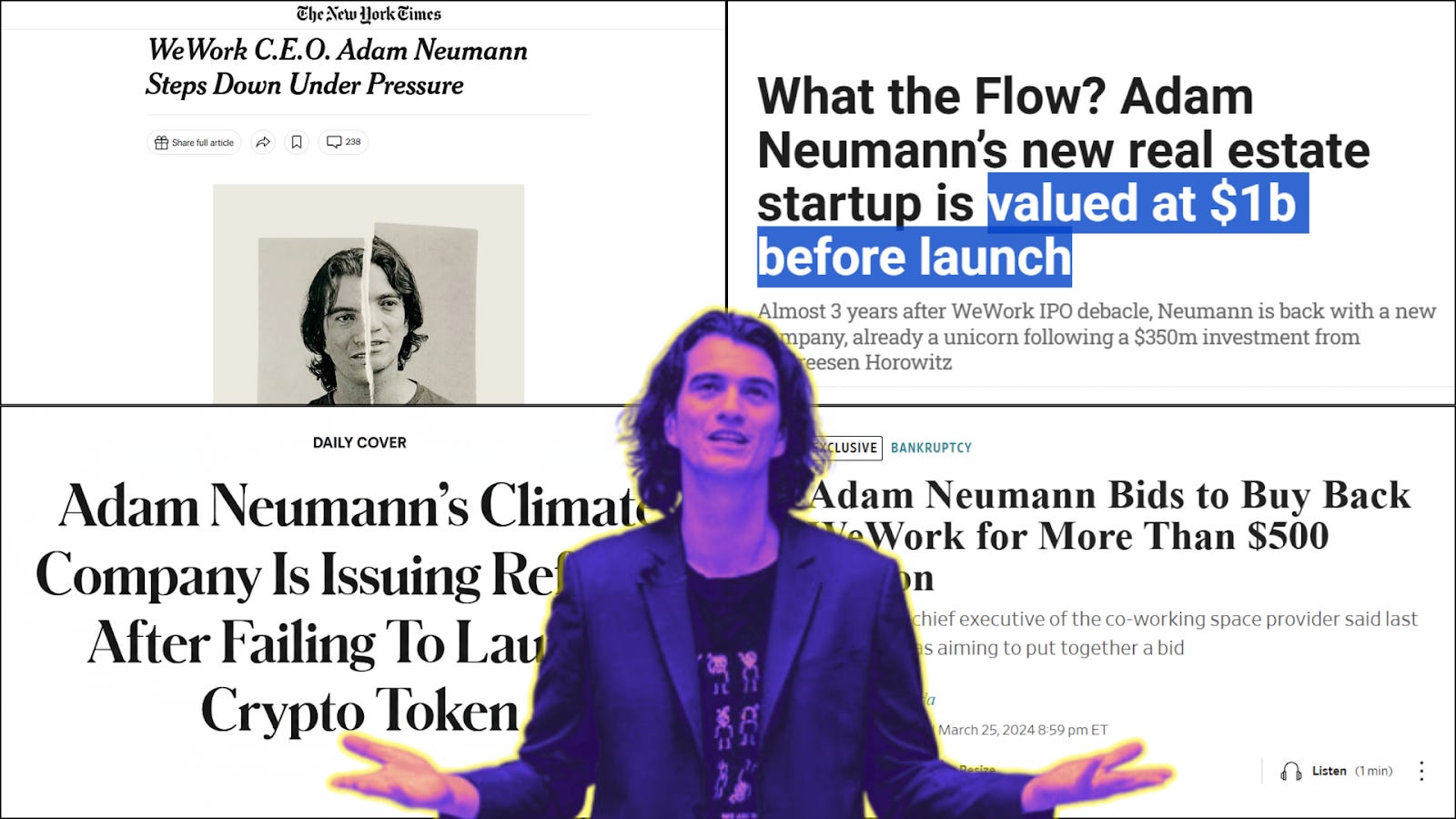
He then walks away with a little over $1B in exit payments. Buys some real estate. And just disappears for a while.
That’s where a lot of the media headlines stop. So I decided to dig into what he has been up to in the last 6 years.
The Post-Exit Shopping Spree Turned $1B Real Estate Empire
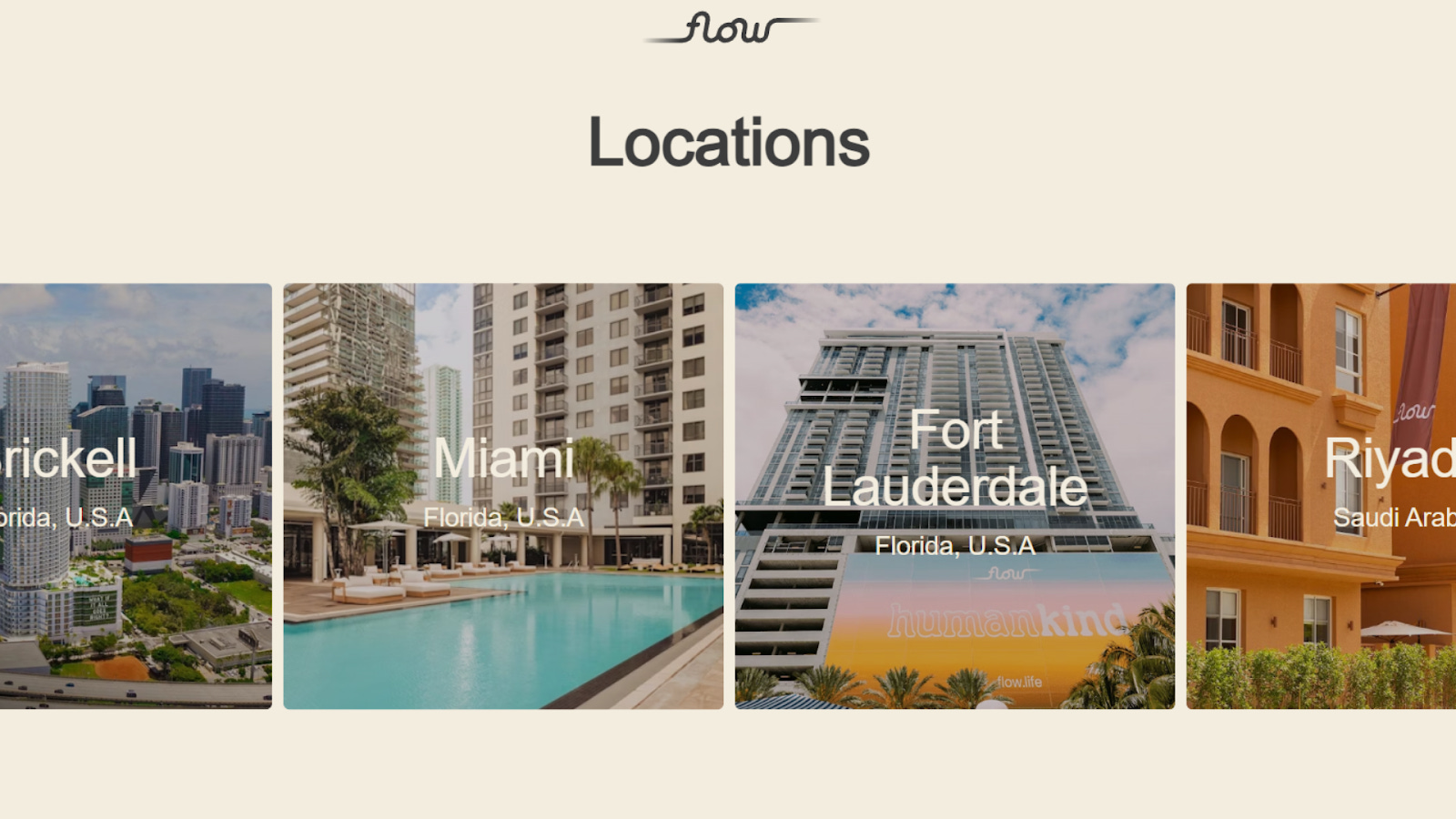
Between 2019 and 2022, Adam Neumann quietly acquired stakes in more than 4,000 apartment units across Atlanta, Nashville, Miami, and Fort Lauderdale. Then in August of 2022, Adam announced Flow, a residential real estate company focused on transforming the rental experience. Think WeWork, but for apartments. And he did it with the biggest individual check Andreessen Horowitz had ever written ($350 million).
Marc Andreessen personally wrote a blog post calling Adam a “visionary leader” who had “revolutionized” real estate. The investment valued Flow at over $1 billion before it even officially launched. For almost two years, Flow operated in stealth. In April 2024, Adam finally unveiled the brand and talked about community, technology, integrated experiences, and how Flow properties were already 95-96% occupied before the brand even launched.
Flow secured a $155 million construction and inventory loan to finish the project and convert it from rentals to condos. And then in October 2024, Adam launched a coworking service inside Flow buildings called Workflow. Clever. But this time, it’s only in properties Flow owns or manages.
In April of this year, Flow raised another $100 million (again led by a16z), bringing the company’s valuation to $2.5 billion. Adam also launched Flow House (a 40-story, 466-unit condo development in Miami Worldcenter with prices starting at $450,000).
As of 2025, Flow owns or controls more than 3,000 apartments across Florida, Georgia, Tennessee, and Saudi Arabia and is planning to go public soon.
The $70M Token That Never Launched

In May 2022, three months before announcing Flow, Adam and his wife, Rebekah, co-founded Flowcarbon (technically his first venture after WeWork), a blockchain-based carbon credit trading platform. Companies could buy tokenized carbon credits (called Goddess Nature Tokens, or GNT) to offset their emissions. Andreessen Horowitz led a $70 million funding round (yet again!) with participation from General Catalyst, Samsung Next, and the Celo Foundation.
Flowcarbon planned to launch GNT publicly in 2022, but the crypto market imploded (remember FTX?). Then Verra, one of the largest carbon credit registries, banned the tokenization of retired carbon credits. Flowcarbon kept delaying the token launch, citing “market conditions and resistance from carbon registries.”
In 2024, reports emerged that Flowcarbon had been quietly refunding investors since 2023. The refund process required investors to sign waivers releasing Flowcarbon from all claims and agreeing to confidentiality terms. Despite the failed token launch, Flowcarbon continues to operate. The company still hosts events and maintains that it’s focused on “carbon finance.”
The WeWork Buyback Attempt
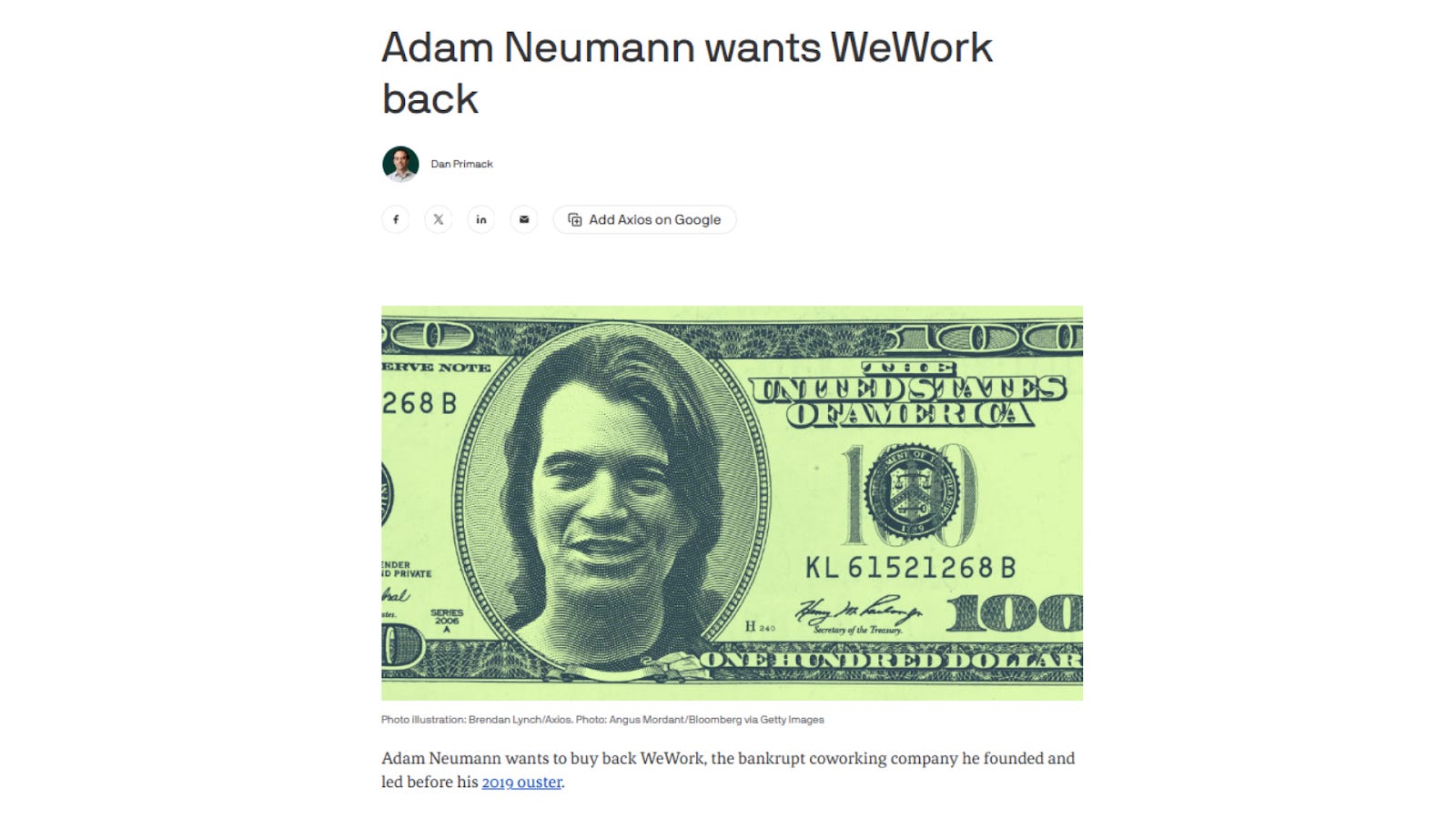
WeWork filed for bankruptcy in late 2023. In February of 2024, Adam started exploring ways to buy the company back. His lawyers sent a letter to WeWork’s bankruptcy advisors saying he was working with Dan Loeb’s Third Point and other investors on a potential bid. Third Point immediately issued a statement saying they weren’t involved and had only had “preliminary conversations.”
Soon, Adam submitted an official bid: more than $500 million to acquire WeWork out of bankruptcy. A Flow spokesperson said the bid was potentially as high as $900 million, pending due diligence.
But nobody on the current team seemed to want Adam Neumann back. His bid faced questions about financing (nobody could figure out who was actually backing him) and his checkered past at WeWork.
So, on May 28, 2024, Adam withdrew his bid. WeWork emerged from bankruptcy in June 2024 with Yardi Systems as its majority owner and John Santora (from Cushman & Wakefield) as the new CEO.
Adam issued a statement calling WeWork’s bankruptcy plan “unrealistic and unlikely to succeed.”
The Bottom Line
Adam lost WeWork, but he didn’t lose his ambition, his network, or his ability to convince his VC bros to write massive checks. Maybe if you’re charismatic enough and wealthy enough, you can keep building companies regardless of your track record. Money buys second chances. And third chances. And $420 million worth of fourth chances from a16z.
Or maybe he learned nothing from WeWork except “do the exact same thing, but with apartments and better PR?” I honestly can’t tell which interpretation is right.
This issue is also eerily similar to one of the recent posts where I wrote about Travis Kalanick’s post-Uber ventures.
Quite a few uncanny resemblances:
Real-estate investments
An attempt to get associated with the same company that kicked them out
Somewhat of an asshole-image in the ecosystem
Legends at fundraising and scaling
Maybe Adam and Travis are long-lost brothers after all.
Until next week,
Chris
P.S. If you’re a founder working on content strategy, GTM, or just trying to figure out how to scale, we should talk.
My ghostwriting company, Napa, helps startups and founders build content engines that actually drive revenue.
Grab some time with our team if you wanna learn more.